Company: Architecture 49
Date: 2010-2013
Location: Winnipeg

The Chief Peguis Trail is the 4.2 kilometre extension of a major thoroughfare that connects communities from Henderson Highway to Lagimodiere Boulevard. This Private Public Partnership model’s goal was not only to improve traffic flow but also introduce several environmental and social benefits, including the connection into residential neighbourhoods with the addition of multi-use pathways, community nodes, and a pedestrian bridge.
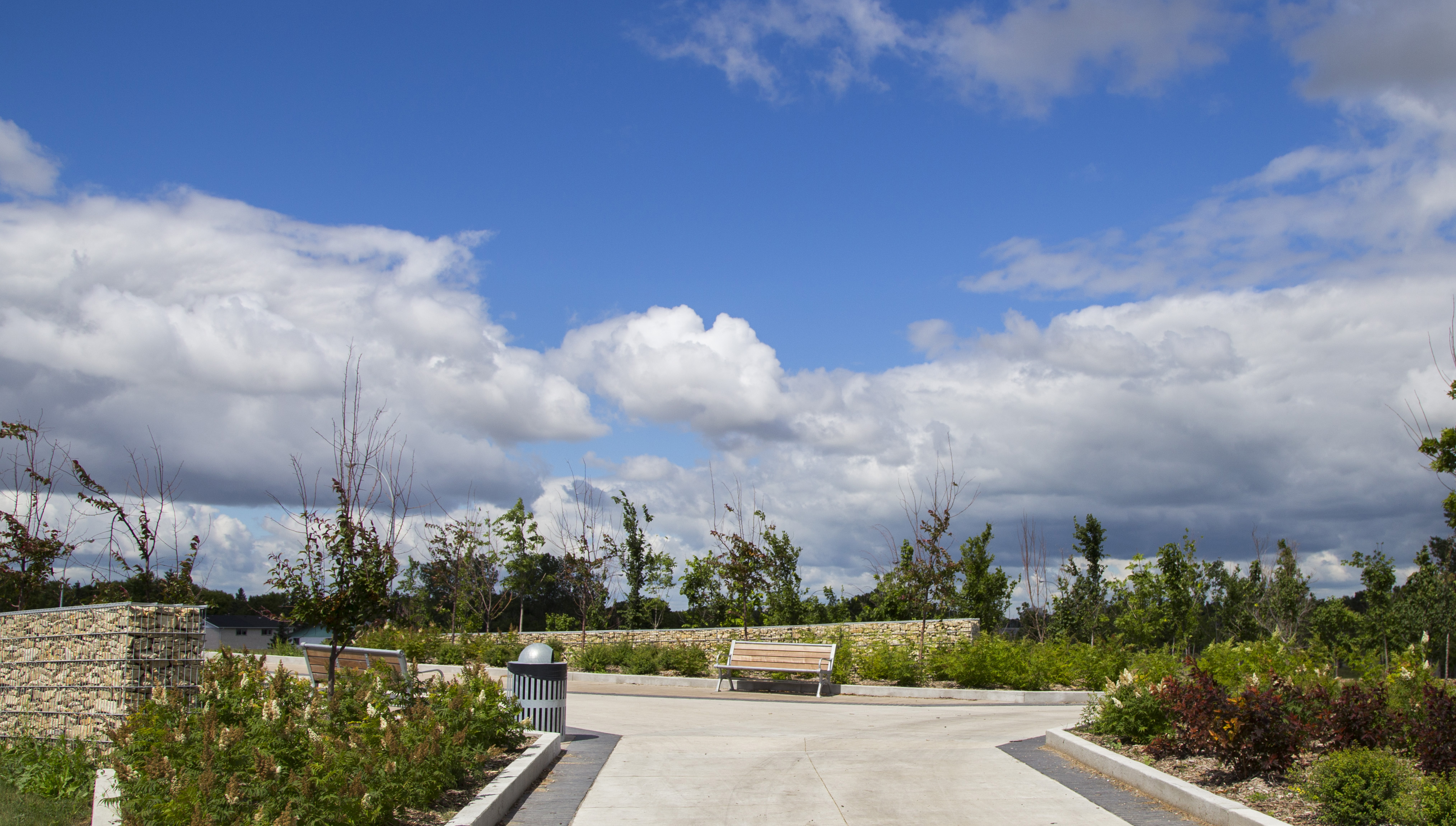
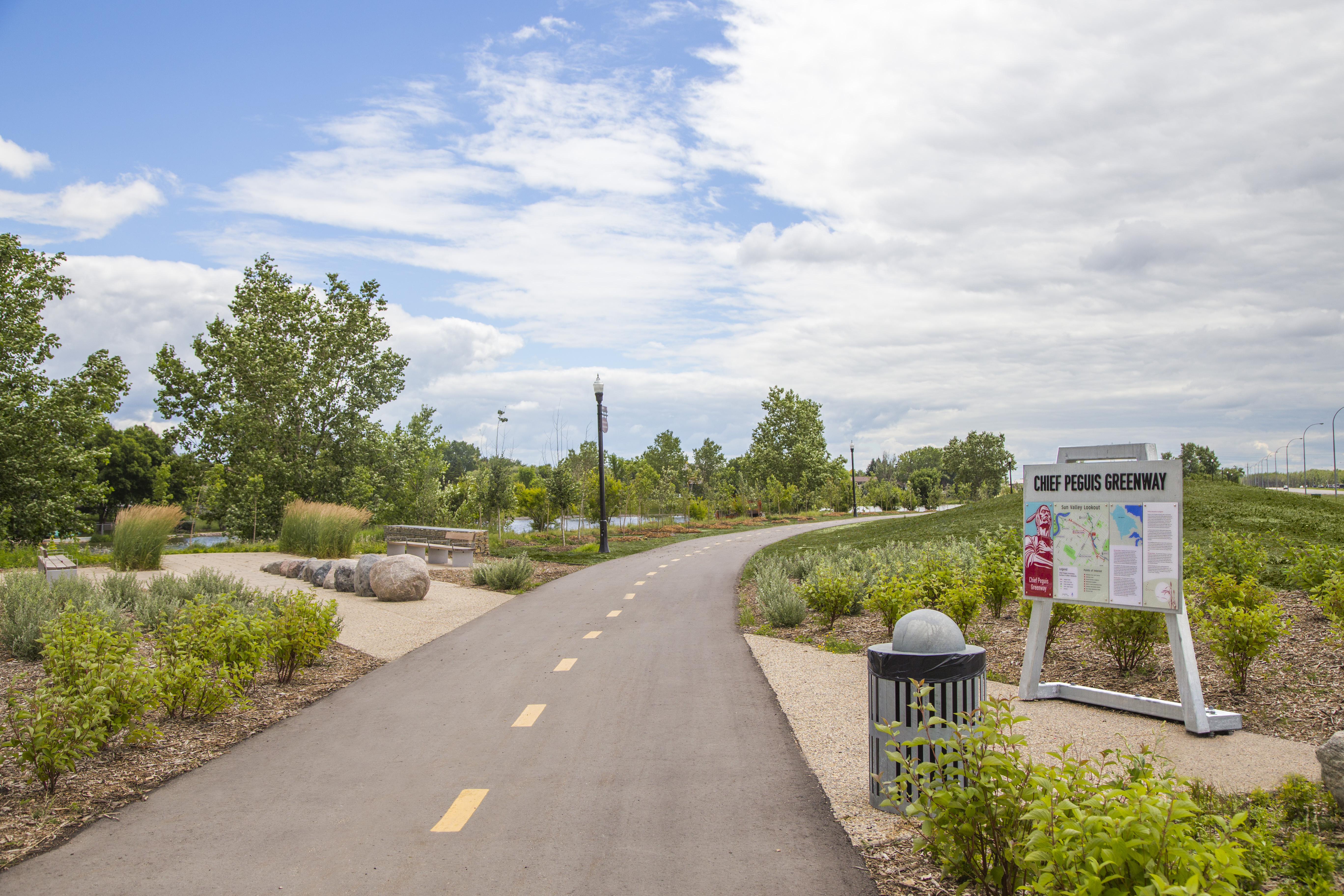
The ten kilometres of multi-use pathways provides a smooth surface for active recreation and circulation routes. Important links extending into the community provide access to existing amenities and neighbourhoods. Three sitting areas along the multi-use path provides users an opportunity to sit, dispose of waste and read interpretive panels, surrounded by naturalized and ecological restored planting areas and art features.
Wayfinding signage provides directional orientation for trail users while introducing a unique graphic identity for the area. Four feature nodes located at key intersections offer larger areas for gathering and resting. Each node has a unique identity, informed by beautiful views and responding and celebrating local history. Feature planting and several amenities include site furnishing, interpretive signage, waste receptacles, vertical elements and distinctive paving patterns.
Two full-sized, full-body wolf packs with a total of ten bronze sculptures greet users at the gateway locations. The realistic sculptures by renowned local artist Peter Sawatzky pay homage to these magnificent creatures while referencing Chief Peguis’ historical signature.
A Tree and Natural Area Preservation and Protection Plan was created to ensure significant vegetation would remain protected during construction and identify existing trees and natural areas to be preserved and protected. A diversity of plant material was selected not only for seasonal interest, colour and texture, but also for wildlife habitat development. Three distinct ecological habitats were created including prairie, woodland, and riparian shrub woodland.